

SKU:
XH-YAP
Category: Crushing Equipment
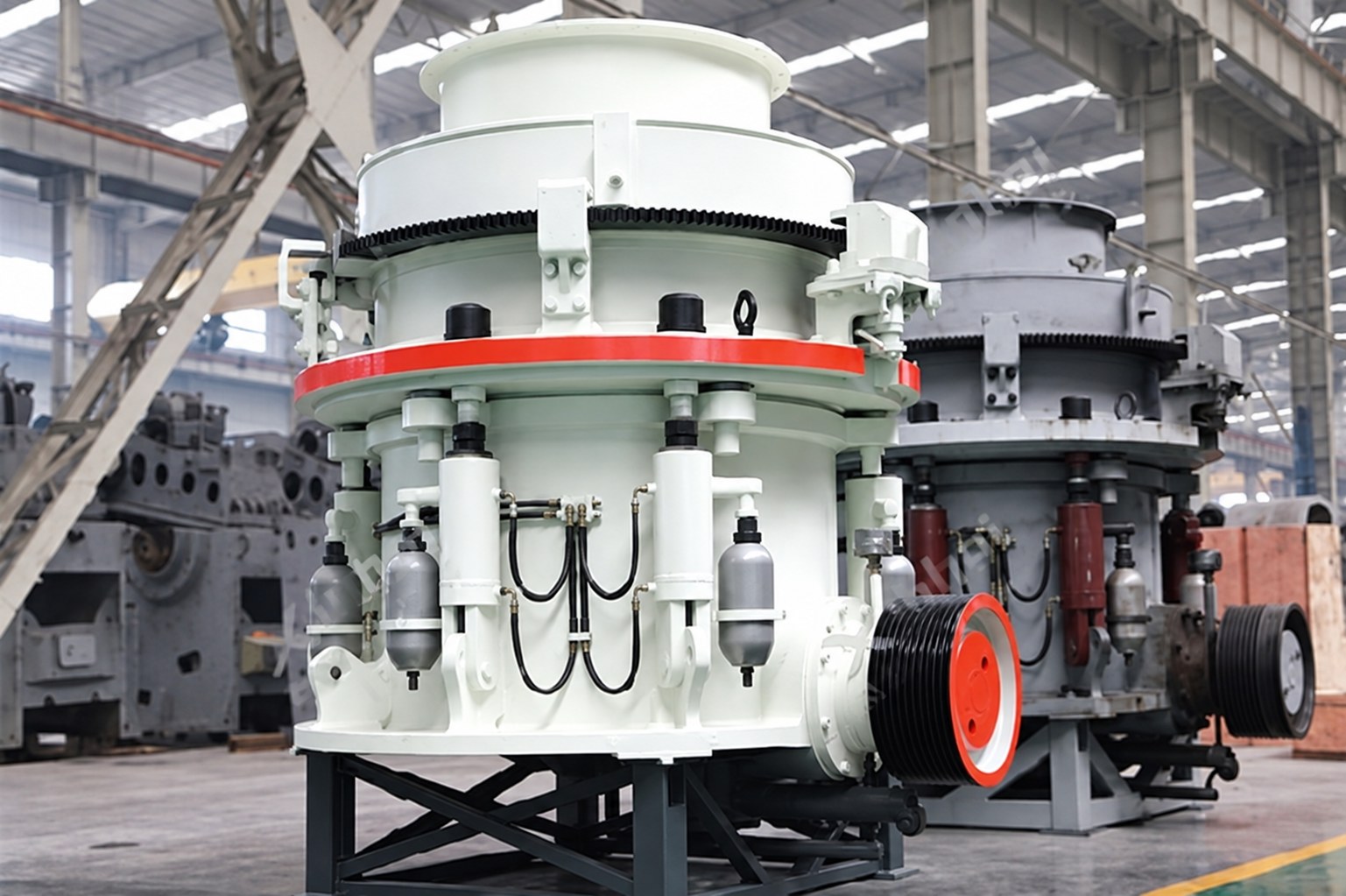
Advantages and Features
- PYY series bottom single-cylinder hydraulic cone crusher has high crushing efficiency and good product particle shape
- it has a variety of crushing cavity types to choose from. By choosing the appropriate crushing cavity type and eccentricity, it can meet the customer’s production requirements to the greatest extent and achieve high output
- the hydraulic adjustment of the ore discharge port can be adjusted in a timely and convenient manner, so that the crusher can work in a crowded feeding state, reducing the consumption of wearing parts and reducing operating costs
- Due to the adoption of mature hydraulic technology, overload protection can be effectively achieved, the crusher structure is simplified, and the weight is reduced. All maintenance and inspection can be completed from the upper part of the crusher, making maintenance more convenient
- Double insurance control of hydraulic and lubrication systems allows the hydraulic cone crusher to be protected from overload and has good bearing lubrication
- Huston hydraulic cone crusher is reasonably priced and has low operating costs.
Working Principle
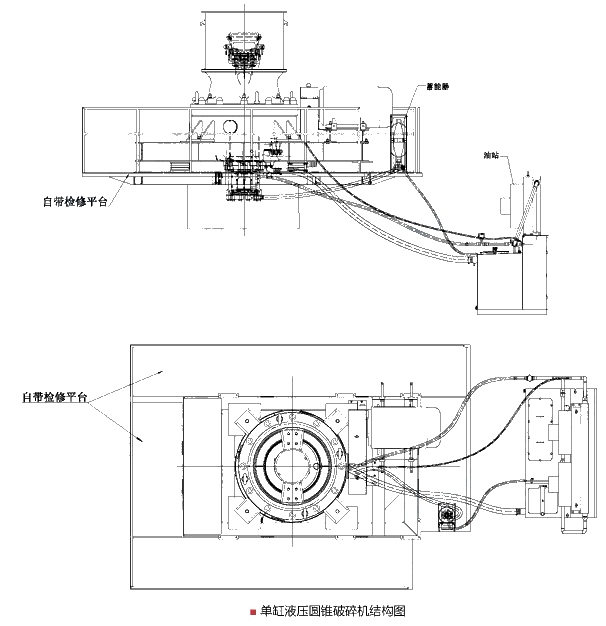
The motor of the single-cylinder hydraulic cone crusher drives the eccentric sleeve to rotate through the V-belt, transmission shaft, and transmission gear. The movable cone performs a swing motion under the action of the eccentric sleeve, causing the movable cone and the fixed cone to sometimes approach and sometimes deviate, thereby continuously squeezing or impacting the material to break it, and the broken material is discharged from the lower discharge port. The difference between the hydraulic cone crusher and the spring cone crusher is not only in the working principle, but also in the structural design. The adjustment of the discharge opening size of the spring cone crusher is mainly achieved by adjusting the spring, while the discharge opening size of the hydraulic crusher is mainly achieved by driving the hydraulic cylinder piston. If the discharge opening size is adjusted, it only needs to control the oil inlet and oil return amount of the hydraulic cylinder.
Technical Specifications
| Model | cavity type | Feeding port size (mm) | Feeding particle size (mm) | Minimum discharge size (mm) | Discharging size (mm) | Power(kW) | Weight⑴ | ||||
| stroke | stroke | stroke | stroke | stroke | stroke | ||||||
| PYY100 | 16 | 22 | 16 | 22 | 90 | 6 | |||||
| A | 150 | 120 | 12 | 15 | 39 | 37 | |||||
| B | 130 | 105 | 10 | 11 | 33 | 31 | |||||
| C | 100 | 85 | 7 | 9 | 33 | 30 | |||||
| D | 40 | 32 | 5 | 6 | 31 | 29 | |||||
| PYY200 | 18 | 25 | 18 | 25 | 160 | 10.6 | |||||
| A | 220 | 180 | 18 | 22 | 35 | 30 | |||||
| B | 150 | 120 | 15 | 19 | 35 | 30 | |||||
| C | 80 | 60 | 9 | 12 | 35 | 30 | |||||
| D | 40 | 32 | 6 | 8 | 35 | 30 | |||||
| PYY300 | 25 | 32 | 25 | 32 | 250 | 18.5 | |||||
| A | 230 | 190 | 20 | 25 | 45 | 40 | |||||
| B | 150 | 125 | 17 | 20 | 45 | 40 | |||||
| C | 80 | 60 | 10 | 13 | 40 | 35 | |||||
| D | 40 | 32 | 6 | 8 | 40 | 35 | |||||
| PYY500 | 25 | 32 | 40 | 25 | 32 | 40 | 315 | 22.5 | |||
| A | 230 | 180 | 22 | 26 | 30 | 50 | 45 | 40 | |||
| B | 150 | 125 | 19 | 22 | 26 | 48 | 43 | 38 | |||
| C | 100 | 80 | 12 | 14 | 16 | 40 | 35 | 30 | |||
| D | 50 | 40 | 8 | 10 | 12 | 30 | 25 | 20 | |||
| model | stroke | Tight edge discharge opening (mm) and corresponding production capacity (t/h) | ||||||||
| 8 | 12 | 16 | 20 | 25 | 30 | 35 | 40 | 45 | ||
| PYY100 | 16 | 35~40 | 45~55 | 55~65 | 65~75 | 75~85 | 90~100 | 105~115 | ||
| 22 | 45~50 | 55~65 | 65~75 | 75~90 | 85~105 | 100~125 | 115~135 | |||
| PYY200 | 18 | 65~75 | 75~90 | 85~105 | 100~125 | 135~150 | 160~175 | 170~190 | ||
| 25 | 90~110 | 110~130 | 125~155 | 160~180 | 185~210 | |||||
| PYY300 | 25 | 100~120 | 110~135 | 130~160 | 150~180 | 170~200 | 200~230 | 230~260 | 250~290 | 270~310 |
| 32 | 110~135 | 130~150 | 160~200 | 180~220 | 200~250 | 230~280 | 260~310 | 280~320 | 300~340 | |
| PYY500 | 25 | 100~120 | 120~150 | 140~170 | 160~190 | 190~220 | 220~250 | 250~280 | 280~310 | 330~370 |
| 32 | 150~170 | 170~200 | 200~230 | 250~270 | 280~300 | 310~340 | 370~420 | 430~500 | ||
| 40 | 180~200 | 210~240 | 250~280 | 300~330 | 330~380 | 370~420 | 430~500 | |||
| Model | cavity type | Feeding port size (mm) | Feeding particle size (mm) | Minimum discharge size (mm) | Discharging size (mm) | Power(kW) | Weight(t) | ||||
| stroke | stroke | stroke | stroke | stroke | stroke | ||||||
| PYYZ100 | 16 | 22 | 16 | 22 | 75~90 | 8.3 | |||||
| A | 250 | 210 | 35 | 35 | 65 | 60 | |||||
| B | 200 | 170 | 35 | 35 | 65 | 60 | |||||
| PYYZ200 | 18 | 25 | 18 | 25 | 110~160 | 11.8 | |||||
| A | 330 | 280 | 27 | 30 | 65 | 60 | |||||
| B | 250 | 210 | 25 | 28 | 60 | 55 | |||||
| PYYZ300 | 25 | 32 | 25 | 32 | 160~250 | 20 | |||||
| A | 380 | 320 | 28 | 32 | 73 | 69 | |||||
| B | 280 | 240 | 26 | 30 | 66 | 62 | |||||
| PYYZ500 | 18 | 25 | 32 | 18 | 25 | 32 | 250~315 | 33 | |||
| A | 500 | 420 | 50 | 55 | 60 | 80 | 75 | 70 | |||
| B | 380 | 320 | 40 | 45 | 60 | 70 | 65 | 60 | |||
| model | stroke | Tight edge discharge opening (mm) and corresponding production capacity (t/h) | ||||||||
| 35 | 40 | 45 | 50 | 55 | 60 | 65 | 70 | 75 | ||
| PYYZ100 | 16 | 135~150 | 145~165 | 155~175 | 165~185 | 175~190 | 180~205 | |||
| 20 | 160~180 | 170~200 | 180~210 | 190~220 | 200~230 | 205~235 | ||||
| PYYZ200 | 18 | 160~190 | 180~210 | 200~230 | 230~250 | 250~270 | 270~300 | |||
| 25 | 190~240 | 210~260 | 230~280 | 260~310 | 290~340 | 310~370 | ||||
| PYYZ300 | 25 | 250~300 | 290~340 | 320~350 | 350~380 | 380~410 | 410~440 | 440~470 | ||
| 32 | 340~390 | 370~420 | 400~440 | 430~470 | 470~500 | 500~510 | 530~540 | |||
| PYYZ500 | 18 | 300~350 | 330~380 | 370~420 | 400~450 | 430~480 | 460~510 | 500~550 | ||
| 25 | 500~550 | 550~600 | 600~650 | 650~700 | 700~750 | 750~800 | ||||
| 32 | 650~700 | 700~750 | 750~800 | 825~875 | 900~950 | 950~1000 | ||||
Case Study
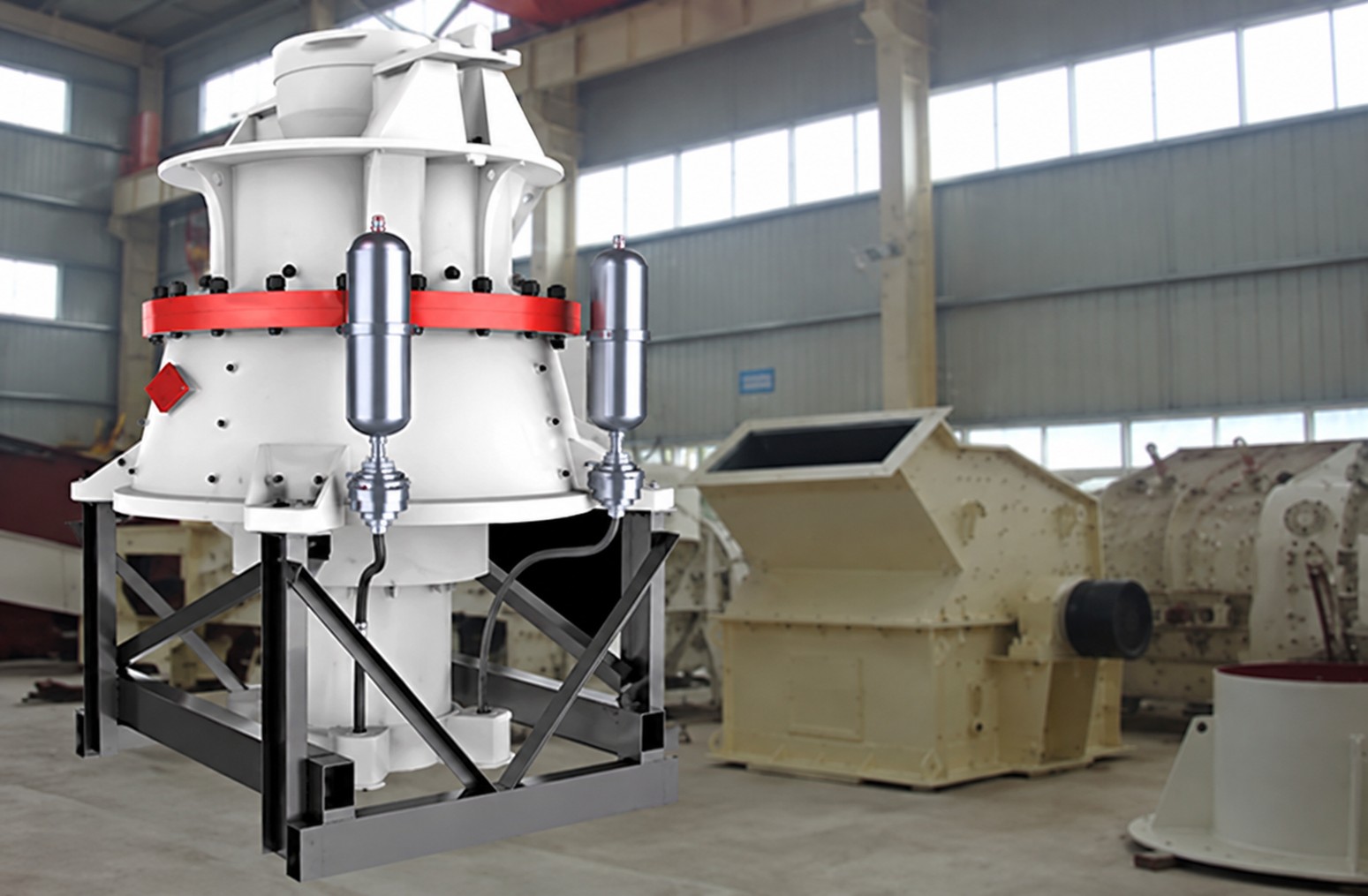
In a gold mine concentrator in Zimbabwe, the nature of the ore is relatively complex. The manufacturer’s requirements for the particle size of the crushed ore are variable, and the ore discharge port is adjustable. Later, the equipment of Huston hydraulic cone crusher manufacturer was selected, and its hydraulic cylinder was used to lift and lower the moving cone to realize functions such as automatic adjustment of the ore discharge port and cavity cleaning. Huston also added automatic control functions to this crusher to achieve coarse crushing, medium crushing, fine crushing and different levels of crushing. The clogging rate during application is almost zero, and the customer is very satisfied with the crushing particle size.