

SKU:
XH-YLMJ
Category: Grinding Equipment
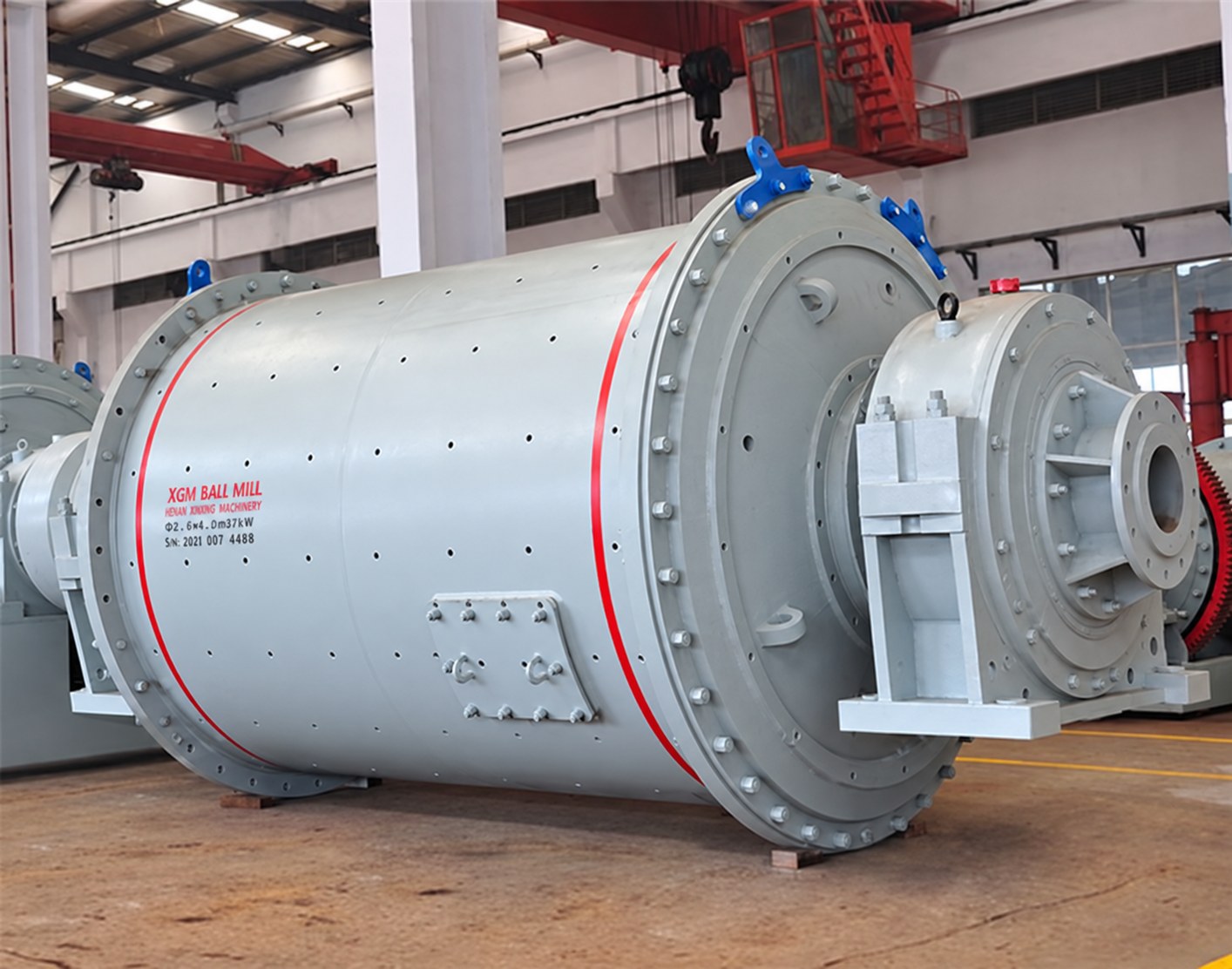
Advantages and Features
- Jacking device for easy maintenance
- Static and dynamic pressure bearings for smooth and reliable operation
- Slow speed transmission for easy maintenance and start-up
- Oil mist lubrication device to ensure reliable lubrication of large and small gears
- Gas clutch for flexible start-up.
Working Principle
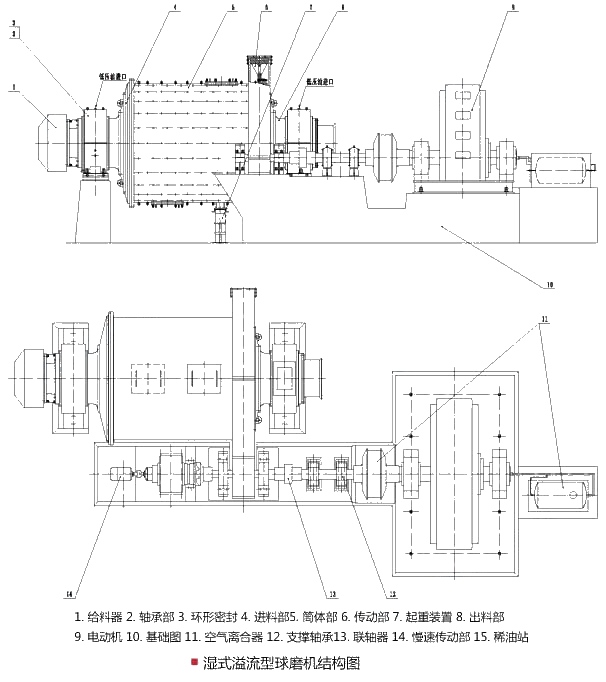
The main component of the wet overflow ball mill is a cylinder with a smaller diameter and a larger length. It is supported by a rolling bearing and rotates slowly through a transmission mechanism. The material is fed from the feed end of the cylinder. In the cylinder, the material is crushed due to the impact and self-grinding of the steel balls and the ore itself. Due to the continuous feeding of materials, the pressure causes the materials in the barrel to move from the feeding end to the discharging end. The slurry is higher than the lower edge of the hollow shaft at the discharging end and overflows by itself. The hollow shaft is equipped with anti-helical blades, which can return overflowing steel balls and coarse ore blocks into the mill.
Technical Specifications
| Model | Barrel diameter (mm) | Barrel length (mm) | Motor model | Motor power (kW) | Length(mm) | See (mm) | Height(mm) | Effective volume (m3) | Ball loading amount (t) | Weight(kg) |
|---|---|---|---|---|---|---|---|---|---|---|
| MQY 0918 | 900 | 1800 | Y225M-8 | 22 | 5080 | 2300 | 2015 | 0.9 | 1.66 | 6078 |
| MQY 1212 | 1200 | 1200 | Y225S-8 | 18.5 | 5788 | 2994 | 2540 | 1.14 | 2.4 | 11473 |
| MQY 1224 | 1200 | 2400 | YR280S-8 | 55 | 6112 | 2794 | 2540 | 2.28 | 3.8 | 12308 |
| MQY 1515 | 1500 | 1500 | JR115-8 | 60 | 5766 | 2945 | 2600 | 2.2 | 6.4 | 15424 |
| MQY 1530 | 1500 | 3000 | JR125-8 | 95 | 7979 | 2945 | 2600 | 5 | 10 | 18690 |
| MQY 2122 | 2100 | 2200 | JR128-8 | 155 | 8070 | 4840 | 3795 | 6.6 | 14 | 47800 |
| MQY 2130 | 2100 | 3000 | JR137-8 | 210 | 8870 | 4840 | 3795 | 9 | 20 | 47220 |
| MQY 2136 | 2100 | 3600 | JR137-8 | 210 | 9300 | 4840 | 3795 | 10.8 | 22 | 52010 |
| MQY 2145 | 2100 | 4500 | JR148-6 | 310 | 11029 | 4738.6 | 3300 | 13.5 | 23.8 | 58305 |
| MQY 2430 | 2400 | 3000 | JR1410-8 | 280 | 9710 | 4778 | 4120 | 12.1 | 23 | 65880 |
| MQY 2721 | 2700 | 2100 | JR1410-8 | 280 | 9400 | 5600 | 4700 | 10.7 | 24 | 63900 |
| MQY 2736 | 2700 | 3600 | TDMK400-32 | 400 | 13049 | 5800 | 4680 | 17.8 | 32 | 96570 |
| MQY 2740 | 2700 | 4000 | TDMK400-32 | 400 | 11850 | 5667 | 4496 | 20.4 | 40 | 78800 |
| MQY 3231 | 3200 | 3100 | TDMK630-36 | 630 | 12750 | 6760 | 5150 | 21.4 | 45 | 107660 |
| MQY 3245 | 3200 | 4500 | TDMK630-36 | 630 | 14356 | 7200 | 5152.5 | 32.8 | 65 | 130283 |
| MQY 3254 | 3200 | 5400 | TM1000-36/2600 | 1000 | 15800 | 6760 | 5200 | 37.2 | 73 | 121000 |
| MQY 3645 | 3600 | 4500 | TM1000-36/2600 | 1000 | 15000 | 7200 | 6326 | 41.8 | 76 | 135000 |
| MQY 3650 | 3600 | 5000 | TM1250-40/3250 | 1250 | 17157 | 7755 | 6326 | 46.4 | 86 | 145000 |
| MQY 3660 | 3600 | 6000 | TM1250-40/3250 | 1250 | 19000 | 7755 | 6326 | 55.7 | 102 | 154000 |
| MQY 3690 | 3600 | 9000 | TDMK1800-30 | 1800 | 28000 | 4600 | 5600 | 83 | 163 | 212000 |
| MQY 3867 | 3800 | 6700 | TDMK1600-30 | 1600 | 19000 | 8200 | 7100 | 70 | 130 | 186000 |
| MQY 4067 | 4000 | 6700 | TDMK1800-30 | 1800 | 15600 | 9600 | 7300 | 78 | 138 | 207000 |
| MQY 4561 | 4500 | 6100 | TDMK2200-30 | 2200 | 18200 | 10500 | 7600 | 93 | 151 | 238000 |
Case Study
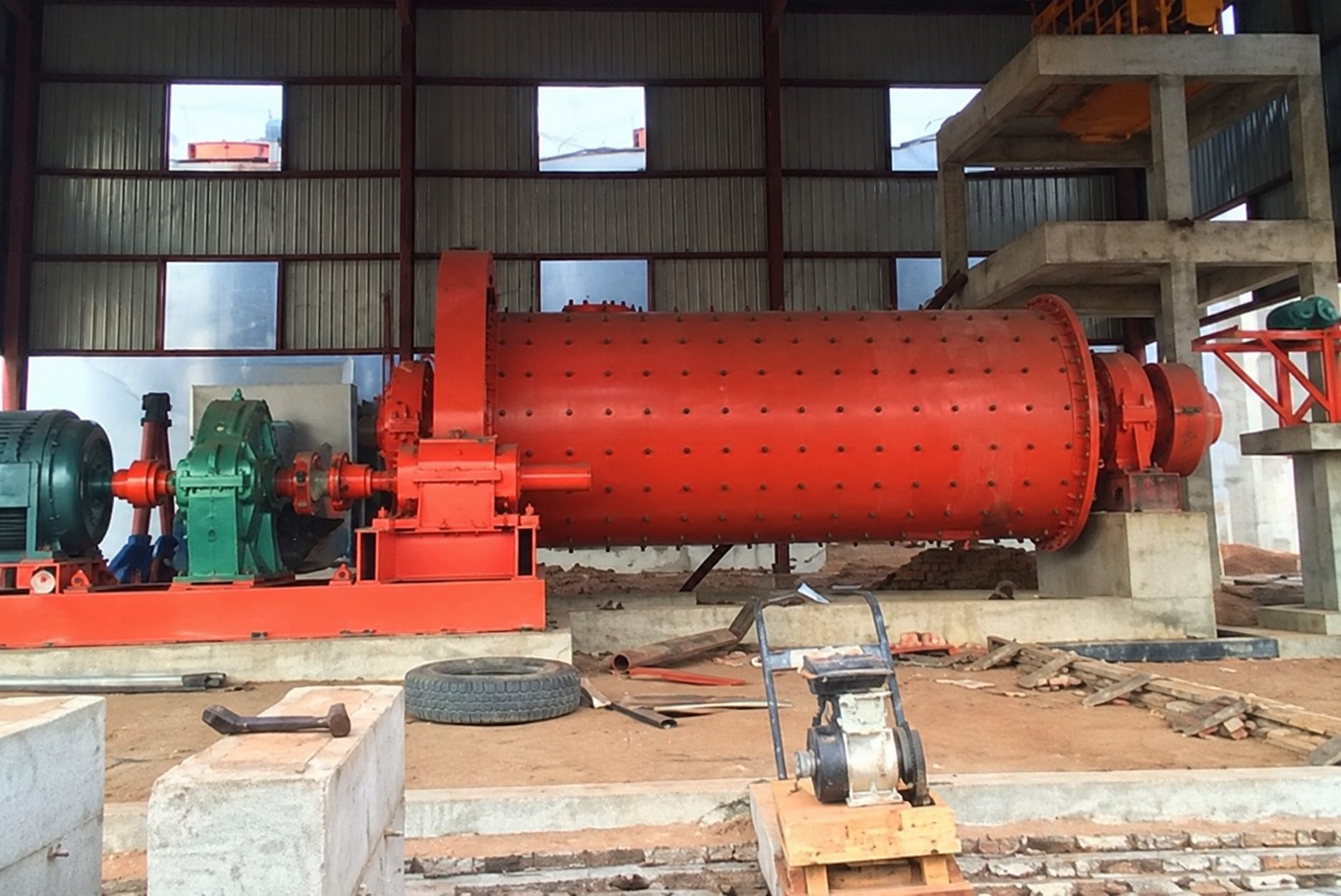
In the original production process of tungsten concentrate, in order to pursue a larger processing capacity, a grid-type ball mill was used in the second-stage grinding process. In the end, it was found that the output was not up to standard and the equipment was severely damaged, so Huston’s wet overflow ball mill was used. The overflow ball mill does not require forced discharge of ore, and the slurry overflows automatically, which reduces equipment consumption and energy consumption. The discharge particle size is small, the grinding particle size qualification rate is greatly improved, and the cost is controlled.